John Imsdahl
 Operation Metro Surge, the immigration operation launched by the United States Department of Homeland Security(DHS) has entered its third month. The operation, which started on December 1, 2025, has consisted of a massive influx of federal agents into Minnesota. While the agents come from Immigration and Customs Enforcement (ICE), Homeland Security Operations (HSI), Customs and Border Protection (CBP) and Federal Bureau of Prisons (FBP), they are most commonly referred to as ICE. Their numbers are estimated exceed 3,000, many of whom are new recruits to those agencies and have minimal training.

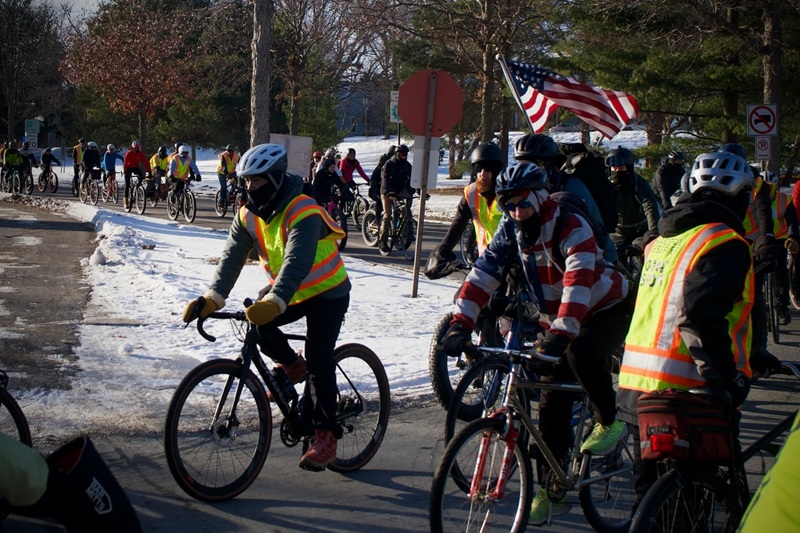
for a mutual aid fundraiser to benefit the Immigrant Rapid Response Fund - photo by John Imsdahl)
This surge has resulted in a major disruption to the lives of the people living in Minnesota, and particularly in the Twin Cities of Minneapolis and St. Paul, which most contain many immigrant communities. Minnesota is home to a large Somali American community, as well many immigrants from South and Central America, and these communities have been especially hard hit by the Trump Administration’s heavy-handed immigration policies. Federal agents have been unleashed on city streets, and have aggressively pursued a daily arrest and apprehension quotas reportedly mandated by Trump advisor Stephen Miller. The Trump administration’s demand that agents meet these quotas has led to widespread harassment and detention of individuals agents believe might lack legal status in the United States.
Countless cases have been recorded of federal agents detaining people that are brown or black skinned, have an accent that indicates that they may be immigrant. Often those being harassed — and in some cases detained — are legal U.S. citizens. In some cases, the actions of ICE and other DHS agents go beyond harassment. Agents have been seen attacking Minnesota residents with chemical agents, including tear gas and pepper spray, physically assaulting people, and threatening bystanders and observers. Two Minnesotans have been fatally shot by DHS agent since the beginning of the year, and other were wounded. Many others have been severely injured, including a baby that stopped breathing after their family vehicle was tear gassed.
In response to what many describe as an occupation, Minnesota residents have banded together and mobilized to resist. Some have joined informal,loosely organized ICE observation groups that record and report on ICE movements and help warn neighbors when agents enter an area. Observers alert members of the community by blowing loudly on whistles and honking their car horns to signal ICE’s presence. These actions — widely regarded by the the legal community as constitutionally protected — have nevertheless resulted in some observers being detained, sometimes after agents damaged their vehicles. There are numerous reports of ICE agents photographing observers, recording license plate numbers, and then driving directly to observers’ homes, in what some consider to be an effort to intimidate them.
These intimidation tactics have been largely failed. Anti-ICE protests have grown to tens of thousands of participants. A recent bike ride honoring Alex Pretti, an avid cyclist, was estimated to have drawn as many as ten thousand people, despite temperatures well below freezing. Candlelight vigils and neighborhood protests have also emerged organically throughout the city. It is difficult to travel more than a block or two in any direction without seeing an “ICE OUT” sign or “FUCK ICE” graffiti.
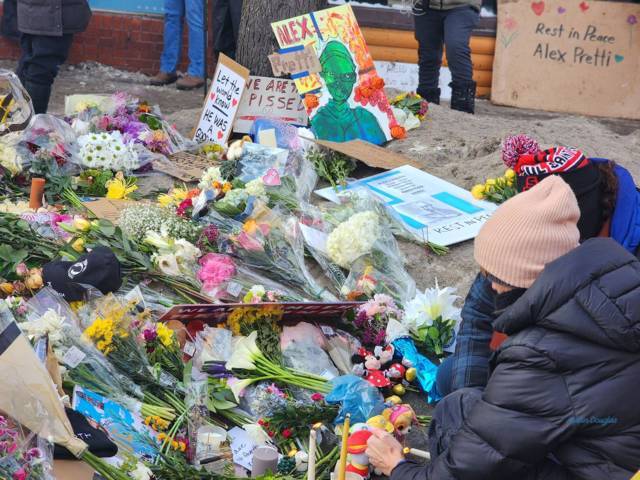
Neighbors have also come together to help support people that are unable or afraid to leave their homes. Mutual aid groups are buying and delivering groceries and other supplies. Musicians are holding performances to raise money for organizations that help with providing food, medical supplies and pet food. Some are creating GoFundMe campaigns to raise money to help people pay rent when they aren’t able to work due to the current conditions.
With each passing day, the people of Minnesota are becoming better organized. Donald Trump and his administration may have viewed Minnesota as a population that they could easily pacify, but they have discovered that the opposite is true. Our resolve to resist grows stronger with each passing hour.